Take
Charge

A mental health and wellbeing program for people who have been referred by a general practitioner, psychiatrist or psychologist.

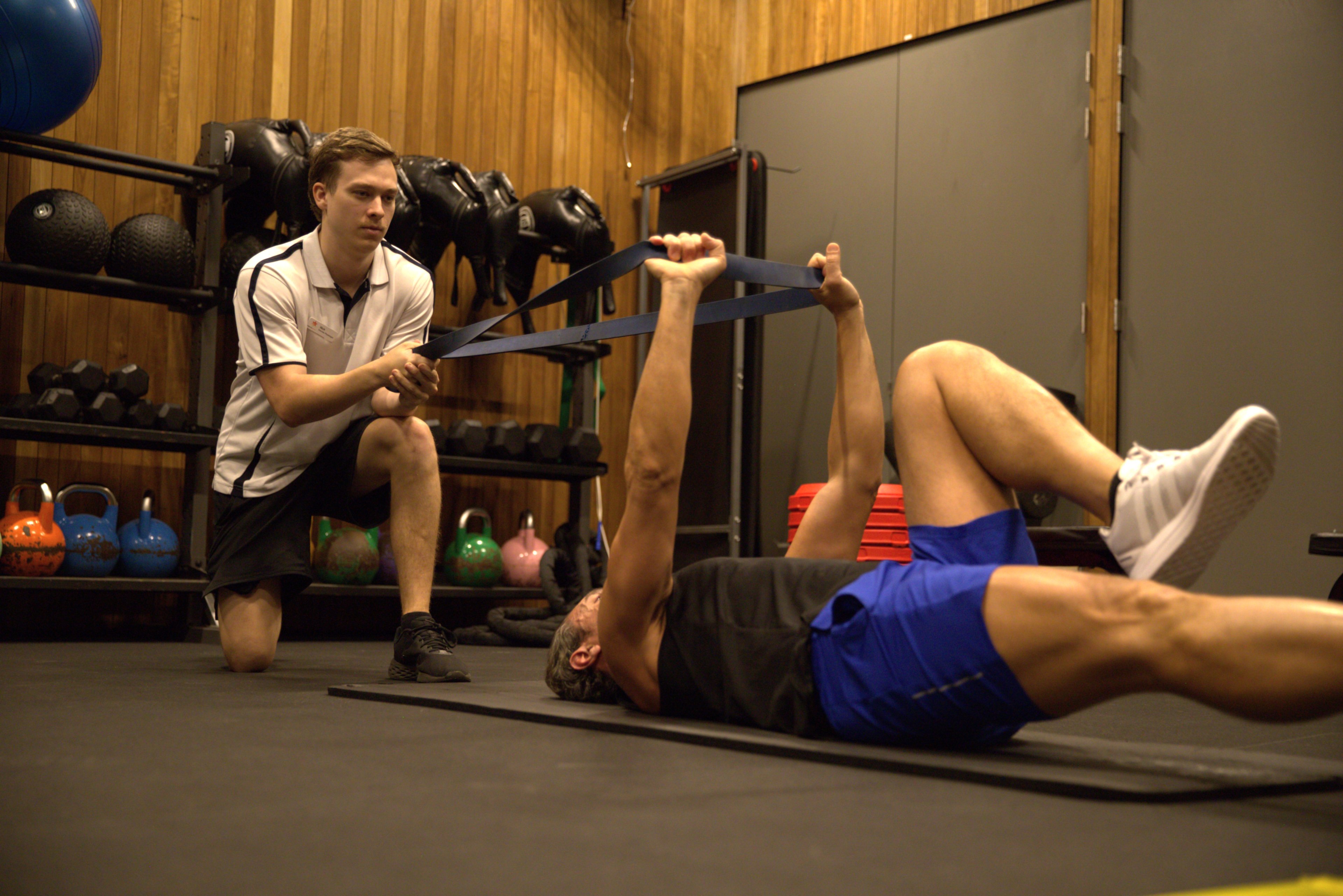
Personal Trainer talking to a male participant using a machine in the gym at Victoria Park Pool

Belgravia Foundation’s Take Charge Exercise Program is a FREE referral-based program that provides access and support to those diagnosed with a mental health condition at a participating Belgravia Leisure venue.

What you need to know

  • 60-day program to encourage you to work towards your personal exercise goals

  • Experienced consultants to provide you with exercise guidance and support

  • Complimentary access to the facilities, services and staff across participating centres

  • Option to bring a support person to accompany you during each visit

How to enrol

  • Read the Take Charge information guide and scan the QR code on the guide to complete and submit your referral.

  • You'll need to include referral details from your GP, psychologist, or psychiatrist on the form.

  • Once received, your referrer will be contacted to discuss the suitability of the program.

  • If agreed, we'll contact you to discuss your personal goals and preferences in using our facilities and services.

  • We can organise your first visit to your preferred centre, where you'll meet key staff and plan a suitable program.

Your progress will be regularly reviewed by your exercise consultant and adjustments may be made to support your continued success.

If a place in the program is not currently available, you will be given options, including a waitlist or referral to another centre which runs the program.
Learn more about the Belgravia Foundation

Young girl wearing goggles in the pool and smiling at the camera

Preschool level one

This level introduces key swimming fundamentals, including breath control through bubble blowing, floating on front and back, and safe entries and exits. Swimmers build confidence with submersion while learning basic arm movements and back kicking up to 5 metres. The estimated time in this level is 6 to 9 months.

A young girl laughing with her mum in the pool at Gunyama Park

Infant level three: 2 to 3 years

This level focuses on building independence and confidence in the water. Children learn to control their movements and safety while developing breath control, submersion, rotation, and coordinated swimming actions. Key milestones include entering and exiting the water independently, pushing and gliding toward a target, and safely jumping in and returning to the pool edge.

Swim teacher instructing a young girl using a kickboard in the pool at Ian Thorpe Aquatic Centre

Preschool level two

This level builds early swimming strength and control, with swimmers learning to paddle and kick up to 4 metres, develop streamlined positions on front and back, and rotate from front float to back float with control. The estimated time in this level is 9 to 12 months.

Two young boys doing freestyle laps in the pool

Primary level five

This level focuses on advanced stroke development and technique, including freestyle with bilateral breathing for 50 metres with tumble turns, backstroke with race finishes for 50 metres, butterfly kick for 10 metres, breaststroke pull-down technique, and butterfly arm and kick timing for six strokes. The estimated time in this level is 9 to 12 months.

Young boy wearing goggles and holding a yellow kickboard while in the pool at Ian Thorpe Aquatic Centre

Primary level four

This level builds endurance and stroke coordination, including freestyle with bilateral breathing for 25 metres, backstroke with correct timing for 25 metres, developing breaststroke for 15 metres, butterfly kick for 10 metres, and survival backstroke for 25 metres. The estimated time in this level is 12 to 18 months.

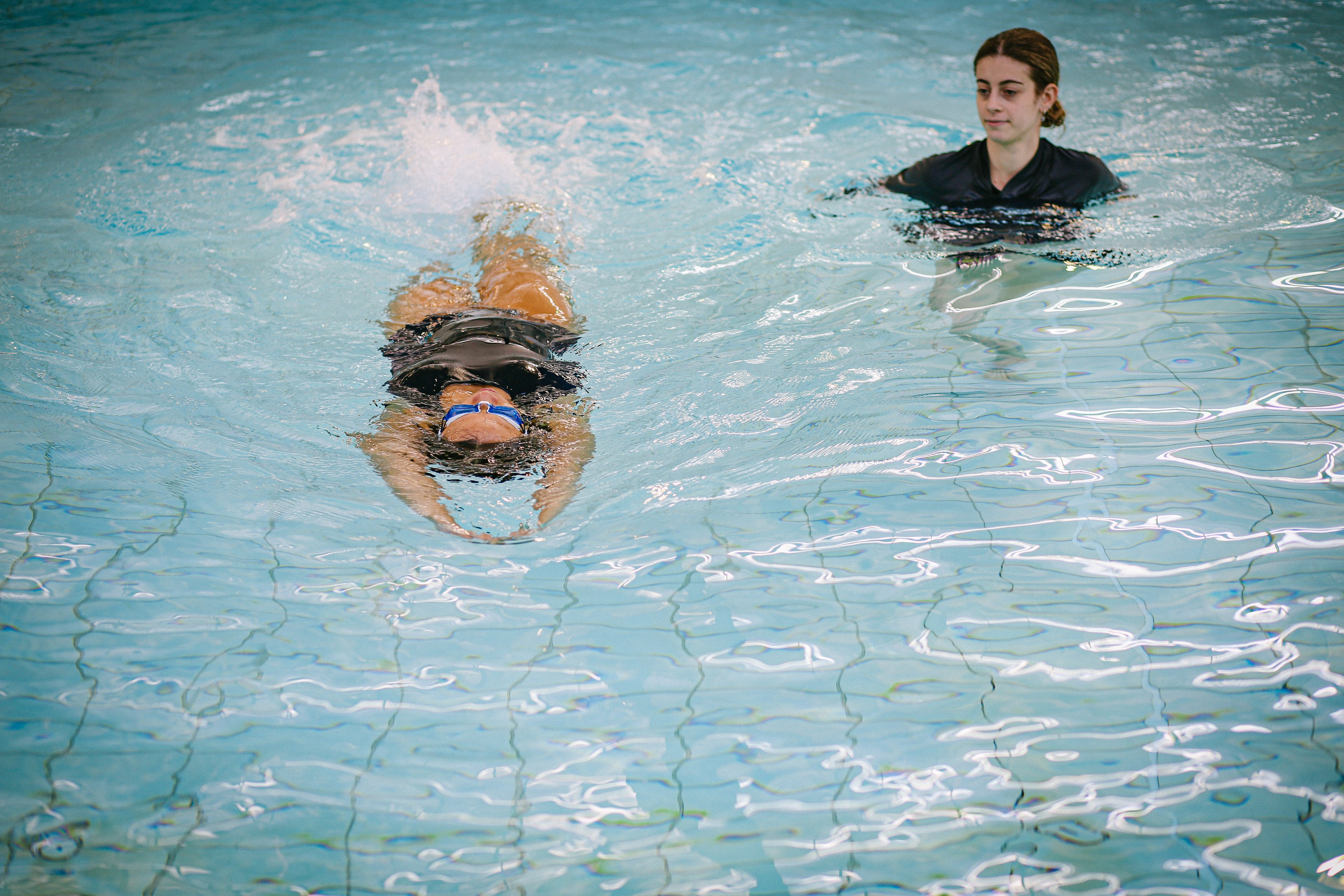
Swim teacher instructing a woman in the pool at Cook + Phillip Park Pool during a learn to swim lesson

Adults swimming lessons

For 16 years and over, our adult learn to swim program caters to all abilities and is tailored to meet your individual needs. Boost your fitness with resistance exercises, improve joint mobility, and enhance your swimming skills and water confidence.

Four children wearing goggles in the pool during a swim lesson at Ian Thorpe Aquatic Centre

Primary level one

This level introduces key swimming fundamentals, including breath control through bubble blowing, floating on front and back, and safe entries and exits. Swimmers build confidence with submersion while learning basic arm movements and back kicking up to 5 metres. The estimated time in this level is 6 to 9 months.

A baby being held in the pool

Splish Splash: 3 to 6 months

Our Splish Splash program is a free water familiarisation class for babies aged 3 to 6 months. Each session is all about helping your little one feel happy and comfortable in the water with gentle holds and playful interaction.

Young boy floating on his back in the pool, being assisted by a swim teacher at Ian Thorpe Aquatic Centre

Preschool level three

This level develops stroke confidence and coordination, introducing freestyle “big arms” up to 10 metres, bilateral breathing, streamline kicking on front and back, and backstroke arms up to 5 metres. Swimmers also practise confident submersion and object retrieval. The estimated time in this level is 9 to 12 months.

A swim teacher in the pool with young kids and parents

Infant level two: 1 to 2 years

This level supports the transition from water familiarisation to early independence. With guided activities, swimmers build confidence, coordination, and safe water habits while developing breath control, floating, rotation, and purposeful movement. A key focus is improving mobility and safety, including confidently holding the pool edge.

Baby sitting on the edge of the pool next to his parents at Gunyama Park

Infant level one: 6 months to 1 year

These lessons build early water confidence and foundational aquatic skills with the support of a parent or carer. Through playful, guided activities, children are introduced to safe water practices, breath control, floating, buoyancy, and gentle movement - helping develop comfort, awareness, and early swimming readiness in a secure environment.

Young girl smiling and waving at the camera during a Learn to Swim class at Gunyama Park

Primary level six

This level focuses on advanced endurance, technique, and water skills. Swimmers complete freestyle and backstroke for 100 metres with tumble turns, develop butterfly for 25 metres, practise sculling and treading water for 2 minutes, learn to read a pace clock, and complete a 100m Individual Medley (IM). The estimated time in this level is 9 to 12 months.

A swim teacher assisting a young girl during a swim lesson at Ian Thorpe Aquatic Centre

Primary level two

This level develops stroke technique and water confidence, including freestyle with bilateral breathing, backstroke up to 10 metres, and confident submersion with object retrieval. The estimated time in this level is 9 to 12 months.

Three young girls smiling at the camera while in the outdoor pool at Gunyama Park

Primary level three

This level focuses on refining strokes and building endurance, including freestyle with bilateral breathing for 15 metres, backstroke with opposite arm timing for 15 metres, developing the breaststroke kick for 10 metres, and practicing survival backstroke. The estimated time in this level is 9 to 12 months.